Perfect H1 and H2: How to Master Google (and New AIs) with Your Site's Headings
Discover how your page's headings (H1) and subheadings (H2) influence your sales. Learn how to align your content with what customers search for on Google and prepare your page for the AI era (GEO).
In this post
- What Your Customer Types into Google Should Be Your H1
- The Hierarchy Between H1 and H2 Explained Simply
- Practical SEO Techniques for Your Headings
- Apply the Immediate Benefit Technique
- What Is GEO: The New SEO Focused on the Era of ChatGPT and AIs
- How FlyB.app's Technical Structure Boosts Your SEO and GEO
- Start Today: Build Your Sales-Optimized Page
When a potential client arrives on your page, you have exactly three seconds to capture their attention and convince them to keep browsing. This initial judgment isn't made by reading explanatory paragraphs or reviews in the footer; it is made almost entirely from the main headline and subheading, known technically in web structure as the H1 and H2 tags.
Writing great phrases for these spaces goes beyond creating pretty slogans. It is about building a noise-free bridge between what your customer searches for in search engines and the answer your page immediately displays on screen. In this practical guide, you will learn how to align your headlines with your audience's real pain points, apply indispensable SEO tactics, and understand the concept of GEO—the evolution of search optimization for Artificial Intelligences.
What Your Customer Types into Google Should Be Your H1
Imagine the behavior of your target audience: they are frustrated with a problem and open a search bar. What they type there isn't usually poetic. They search for practical solutions and direct terms. If you offer an accounting service for doctors and your page features the main headline (H1) "Uniting Innovation with Financial Intelligence," your potential client will likely leave. Their brain is looking for an exact match to soothe their problem.
The secret lies in finding the exact search terms through tools like Google Keyword Planner, AnswerThePublic, or the search bar's own autocomplete function. If doctors in your area search for "specialized accounting for medical clinics," this phrase needs to guide the planning of your main header.
Whenever there is an exact match or direct semantic alignment between the searched term and the headline displayed in H1, the page's bounce rate plummets. The user thinks: "I'm in the right place."
The Hierarchy Between H1 and H2 Explained Simply
The technical structure of your page behaves very similarly to the chapter and section divisions of a physical non-fiction book. To make comprehension easier for Google, your users, and virtual bots, search engines rely on a hierarchy of headings.
- The H1 (Heading 1) represents the title of the book. It must be absolute and unique: always use a single H1 per page, focused on the primary value proposition and your main keyword.
- The H2 (Heading 2) represents the sections of the book. H2s branch out and complement the initial value proposition of your site, answering crucial questions, detailing key benefits, and establishing the next steps.
If the H1 attracts attention and contextualizes the user's search, the H2 subheadings maintain the momentum and keep the reader engaged in the text. Without this structured rhythm, users face a daunting visual wall of text that is difficult to scan, which destroys conversions.
Practical SEO Techniques for Your Headings
When creating performance-focused headlines, avoid excessive adjectives and opt for objective data that facilitates user decision-making. Here are simple conversion examples to help you understand how to boost your organic reach:
| Business Type | Generic Headline (Unsuitable for SEO) | Optimized and Targeted Headline |
|---|---|---|
| Local Gym | A new concept of healthy living near you | Gym with No-Contract Plans in Downtown São Paulo |
| Paid Traffic Agency | We accelerate your sales in a unique way digitally | Paid Traffic Consultancy Focused on Your Return on Investment |
| ERP Software | Organize everything simply today | ERP Management System for Micro-Businesses and Retail Stores |
Apply the Immediate Benefit Technique
Instead of listing your product's features, focus on the consequences of buying it. Insert a solution trigger in the H1 followed by a value-proof validator in the H2. A classic formula for structuring involves combining "[Desired Result] + [Timeframe or Ease] + [No Classic Objection]." For example: Get your deliveries in 24 hours with no commercial registration fee.
What Is GEO: The New SEO Focused on the Era of ChatGPT and AIs
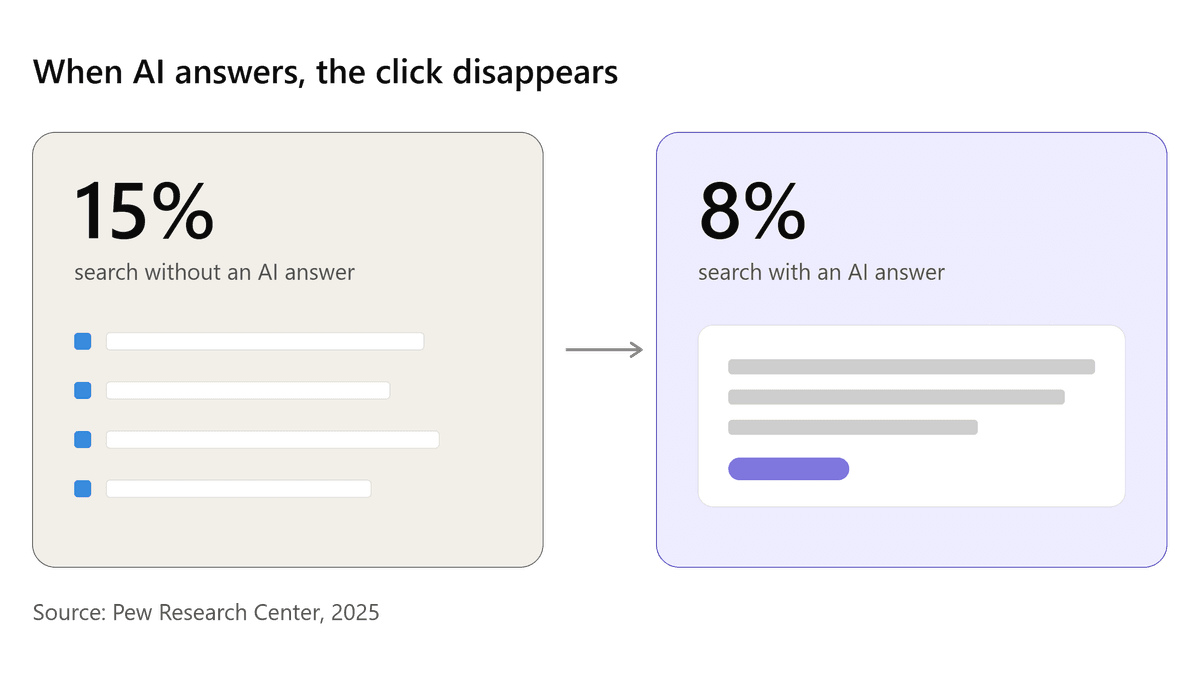
In recent months, search marketing has undergone one of the most dramatic transformations since the inception of indexing algorithms. With generative artificial intelligence solutions such as Gemini, ChatGPT, Claude, and Generative Search Experiences from Microsoft and Google (SGE), the way your website is cataloged has changed.
This new discipline is called GEO (Generative Engine Optimization). It is the science of structuring your information channels not just for traditional static indexing, but to feed language models seamlessly.
When generative AIs synthesize a market landscape at a user's request—for example, "What are the best reseller platforms in the country?"—they scan web pages to extract short answers directly from clear semantic blocks. Websites with semantically structured headings that respond to explicit pain points appear at the top of synthesized citation lists. A well-constructed H2, formulated as a natural answer to common market questions, is the ultimate secret to becoming a benchmark for generative recommendations on these digital platforms.
How FlyB.app's Technical Structure Boosts Your SEO and GEO
Creating this semantic infrastructure doesn't need to take months of work with specialized web usability developers. The code generated under the hood of the FlyB.app platform has been meticulously engineered to shield your technical traffic from common structural flaws.
By leveraging FlyB's infrastructure, you enjoy instant performance thanks to the platform's core pillars:
- Clean semantic tag rendering: Every landing page built with the tool renders
<h1>and<h2>divisions following the best web orthography standards from the W3C consortium. - Extreme loading speed: A critical element for scoring well on Google's Core Web Vitals. Fast pages facilitate accelerated indexing for standard bots and LLM indexers simultaneously.
- Layouts based on high-legibility standards: Ensures low bounce rates on mobile devices while providing seamless text readability for your human audience.
Combining clean, efficient design with correct SEO markup enables the rapid distribution and organic recognition that a digital business needs to build authority and achieve sustainable long-term growth.
Start Today: Build Your Sales-Optimized Page
Crafting the right copy for your H1 and H2 headings can dictate the future of an ad campaign or the return on your business's organic traffic. Studying your market, deciphering your audience's search patterns, and designing captivating subheadings creates a smooth path to conversions on your page.
The best technical environment to host these high-converting headlines is just a click away. Head over to the FlyB platform right now and build your sales page for free—100% structured to rank on today's search engines and tomorrow's top Artificial Intelligence tools.